Acquisition & First Impression

CTA Wording

CTA Wording

The buttons that grab attention and drive signups. Craft CTAs with clear benefits, urgency, and action verbs that convert in under 3 seconds.

what would you do?

How do you fix a CTA with 2.8% conversion when users bounce after 4 seconds?

Your SaaS homepage button says "Try for Free." Traffic is high but conversion is stuck at 2.8%. Analytics show users spend 4 seconds on the hero, then bounce. Your designer wants to make the button bigger. Your copywriter wants to add urgency. Your PM wants A/B tests.

A

Rewrite to "Start Free Trial – See Results in 5 Minutes" with same button size

B

Keep "Try for Free" but add countdown timer showing "Offer ends in 3 days"

C

Change to "Get Started Now" and increase button size by 40%

D

Add pulsing animation to existing "Try for Free" button

what would you do?

How do you fix a CTA with 2.8% conversion when users bounce after 4 seconds?

Your SaaS homepage button says "Try for Free." Traffic is high but conversion is stuck at 2.8%. Analytics show users spend 4 seconds on the hero, then bounce. Your designer wants to make the button bigger. Your copywriter wants to add urgency. Your PM wants A/B tests.

A

Rewrite to "Start Free Trial – See Results in 5 Minutes" with same button size

B

Keep "Try for Free" but add countdown timer showing "Offer ends in 3 days"

C

Change to "Get Started Now" and increase button size by 40%

D

Add pulsing animation to existing "Try for Free" button

what would you do?

How do you fix a CTA with 2.8% conversion when users bounce after 4 seconds?

Your SaaS homepage button says "Try for Free." Traffic is high but conversion is stuck at 2.8%. Analytics show users spend 4 seconds on the hero, then bounce. Your designer wants to make the button bigger. Your copywriter wants to add urgency. Your PM wants A/B tests.

A

Rewrite to "Start Free Trial – See Results in 5 Minutes" with same button size

B

Keep "Try for Free" but add countdown timer showing "Offer ends in 3 days"

C

Change to "Get Started Now" and increase button size by 40%

D

Add pulsing animation to existing "Try for Free" button

The Problem

Generic CTAs kill conversions. "Submit" or "Click here" leaves users guessing what happens next [2]. Visitors have 3 to 5 seconds to understand your button. If they can't answer "What will I get?" they bounce.

The semantic mismatch problem: your homepage promises "Instant insights" but ends with "Learn more." You lose momentum. High-intent traffic drops off because the CTA doesn't deliver on the promise [1].

Most teams ship static buttons without testing. They miss easy wins like better copy or contrasting colors. Without data, you're guessing instead of optimizing the highest-ROI task once traffic is flowing [4].

The Solution

The 3-Second Clarity Test

1. What will happen if I click?

2. What benefit or value do I get?

3. Who is this for?

In 3 seconds, visitors should know exactly what happens when they click, what benefit they get, and if it's for them. If they can't answer these questions, they bounce.

Use strong action verbs. "Get," "Start," "Join," "Claim" beat generic "Submit." Highlight the benefit: "Save You Money" converts better than plain "Sign Up"[2].

First-person framing works. "Get My Free Report" beats "Get Your Free Report." Make it personal. Remove ambiguity by avoiding jargon or hesitation words like "maybe" or "interested?"

Your CTA should double as a value prop. Instead of "Learn More," try "See How It Works" which promises understanding, not passive learning.

Examples for High-Converting CTA Wording

Urgency + Social Proof Combined
Using scarcity messaging before the booking CTA
Airbnb

How they do it
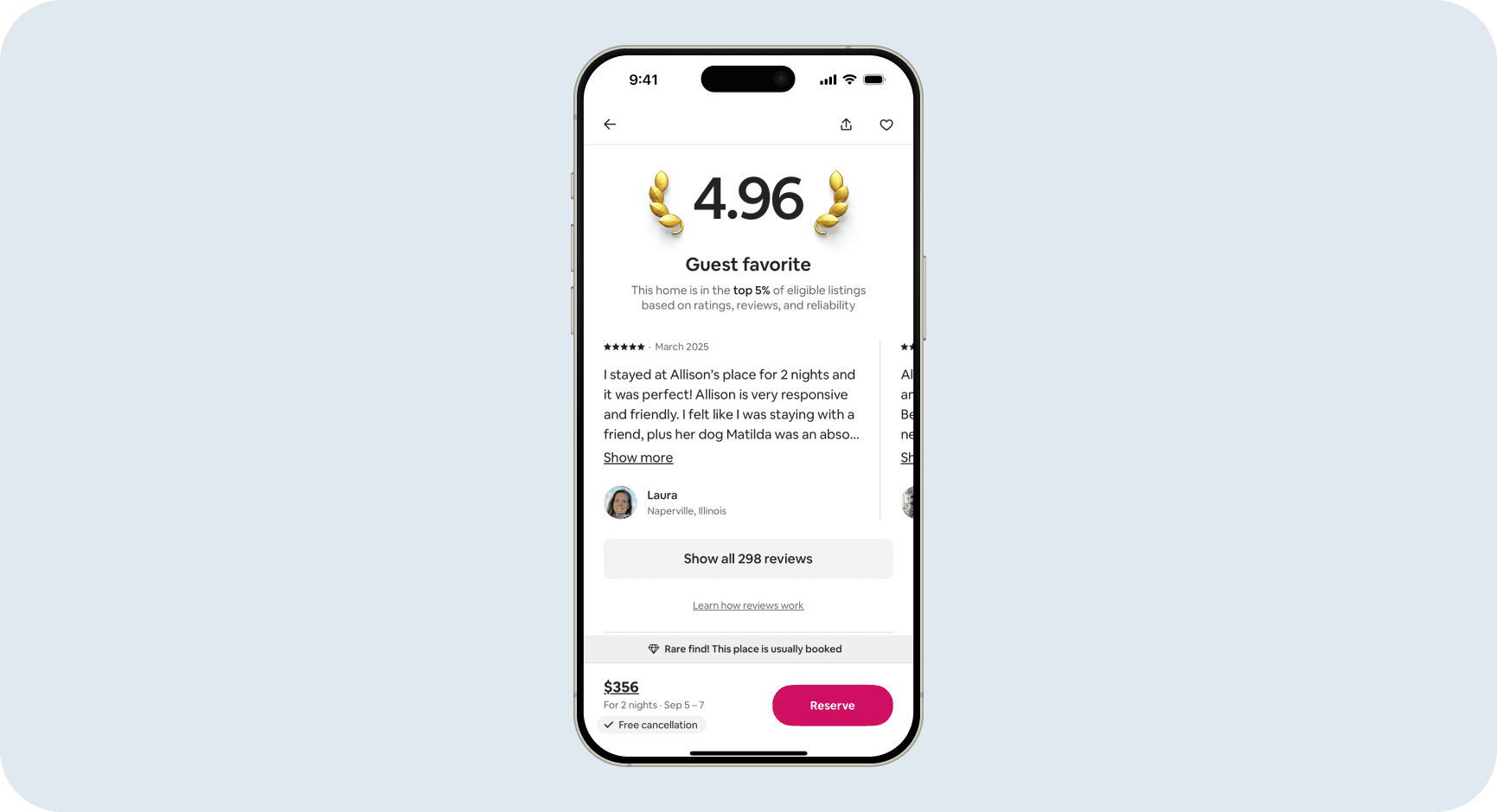
Airbnb builds trust before introducing scarcity. The 4.96 "Guest favorite" and "top 5%" designation establish exceptional quality first. Only after users see reviews does the urgency message appear: "⚡ Rare find! This place is usually booked." This isn't manufactured scarcity but transparent booking data. The placement is strategic: after trust, before commitment. The message informs ("Save this") rather than pressures ("Book now!"), making the urgency feel helpful, not manipulative.
Why it works
The scarcity message "This place is usually booked" with lightning bolt icon creates authentic urgency. It appears after trust is established (4.96 rating, top 5%, reviews) but before the commitment (price/CTA). The phrasing is positive ("Rare find!") not manipulative. Combined with "Free cancellation," it removes risk while adding urgency. Airbnb's scarcity experiments drove 5-20% conversion improvements [3].

Urgency + Social Proof Combined
Using scarcity messaging before the booking CTA

Airbnb

How they do it
Airbnb builds trust before introducing scarcity. The 4.96 "Guest favorite" and "top 5%" designation establish exceptional quality first. Only after users see reviews does the urgency message appear: "⚡ Rare find! This place is usually booked." This isn't manufactured scarcity but transparent booking data. The placement is strategic: after trust, before commitment. The message informs ("Save this") rather than pressures ("Book now!"), making the urgency feel helpful, not manipulative.

Why it works
The scarcity message "This place is usually booked" with lightning bolt icon creates authentic urgency. It appears after trust is established (4.96 rating, top 5%, reviews) but before the commitment (price/CTA). The phrasing is positive ("Rare find!") not manipulative. Combined with "Free cancellation," it removes risk while adding urgency. Airbnb's scarcity experiments drove 5-20% conversion improvements [3].

Urgency + Social Proof Combined
Using scarcity messaging before the booking CTA

Airbnb

How they do it
Airbnb builds trust before introducing scarcity. The 4.96 "Guest favorite" and "top 5%" designation establish exceptional quality first. Only after users see reviews does the urgency message appear: "⚡ Rare find! This place is usually booked." This isn't manufactured scarcity but transparent booking data. The placement is strategic: after trust, before commitment. The message informs ("Save this") rather than pressures ("Book now!"), making the urgency feel helpful, not manipulative.

Why it works
The scarcity message "This place is usually booked" with lightning bolt icon creates authentic urgency. It appears after trust is established (4.96 rating, top 5%, reviews) but before the commitment (price/CTA). The phrasing is positive ("Rare find!") not manipulative. Combined with "Free cancellation," it removes risk while adding urgency. Airbnb's scarcity experiments drove 5-20% conversion improvements [3].

Inverted CTA Hierarchy
Making the signup CTA less prominent than sign-in

Inverted CTA Hierarchy
Making the signup CTA less prominent than sign-in

Inverted CTA Hierarchy
Making the signup CTA less prominent than sign-in

Benefit-First CTA Wording
Leading with "free" removes the commitment barrier

Benefit-First CTA Wording
Leading with "free" removes the commitment barrier

Benefit-First CTA Wording
Leading with "free" removes the commitment barrier

CTA Types by Product

Product Type

Primary CTA

Secondary CTA

Why It Works

Self-Serve SaaS

"Start Free Trial"

"See How It Works"

Trial removes risk, demo shows value

Enterprise SaaS

"Request Demo"

"Talk to Sales"

Sales-led needs human touch

E-commerce

"Add to Cart"

"Save for Later"

Direct purchase vs consideration

Content/Media

"Read Free"

"Subscribe for More"

Taste value before commitment

Marketplace

"Browse Products"

"Sell on Platform"

Buyer vs seller acquisition paths

Mistakes That Kill Success

avoid this

Vague or Generic Language

"Submit" or "Click Here" leaves users guessing. Contextless "Sign Up" lags behind "Save You Money" because the latter reminds users of the benefit they'll receive[2].

The Fix
Replace "Learn More" with action plus benefit: "See How It Works – It's Free." Always tell users what they get and when.

avoid this

Indecisive Tone

Ending CTAs with questions or hesitation ("Interested?" "Maybe try?") kills urgency. GoodUI explicitly advises "Try Being Direct instead of indecisive"[5].

The Fix
Make your CTA read like an instruction, not a suggestion. "Start Free Trial" not "Interested in trying?

avoid this

Misaligned Intent

If your headline offers "Instant Reports" but CTA says "Get Started" without context, users get confused. A mismatch creates a value gap[1].

The Fix
Match CTA to promise. If you promise speed, use "Get Instant Reports – Try Free."

Metrics That Matter

CTA Click-Through Rate (CTR)
Percentage of page visitors who click the CTA. Formula: CTR = (CTA clicks ÷ page views) × 100

CTA Click-Through Rate (CTR)
Percentage of page visitors who click the CTA. Formula: CTR = (CTA clicks ÷ page views) × 100

CTA Click-Through Rate (CTR)
Percentage of page visitors who click the CTA. Formula: CTR = (CTA clicks ÷ page views) × 100

Conversion Rate
Percentage of clicks that complete the intended action (signup, purchase). Formula: Conversion = (conversions ÷ CTA clicks) × 100

Conversion Rate
Percentage of clicks that complete the intended action (signup, purchase). Formula: Conversion = (conversions ÷ CTA clicks) × 100

Conversion Rate
Percentage of clicks that complete the intended action (signup, purchase). Formula: Conversion = (conversions ÷ CTA clicks) × 100

Cost Per Acquisition (CPA)
Average cost to acquire a signup or customer from CTA traffic. Formula: CPA = (total spend ÷ conversions)

Cost Per Acquisition (CPA)
Average cost to acquire a signup or customer from CTA traffic. Formula: CPA = (total spend ÷ conversions)

Cost Per Acquisition (CPA)
Average cost to acquire a signup or customer from CTA traffic. Formula: CPA = (total spend ÷ conversions)

The Strategic Opportunity

30%

Maximum conversion lift from CTA copy experiments. Companies report adding urgency or social proof yielding 10-30% conversion lifts in documented cases.

Urgency Drives Action
Adding "NOW" to a booking CTA lifted clicks by 8% in a 2019 conversion optimization study. Airbnb saw huge lifts by highlighting urgency, like "this property is usually booked" [3].

First-Person Language Works
Incorporating first-person language ("Get My Free Trial" vs "Start Free Trial") increased CTA click-through by about 25% in growth experiments. Small wording shifts create major improvements.

Scarcity Boosts Conversions
Adding scarcity cues or benefit phrases has been repeatedly found to boost conversions by 5-20% in A/B tests [2][3].

Highest ROI Growth Task
Fixing funnel leaks is "the highest ROI investment a growth team can make" [4]. Even a 2% absolute increase in CTR can equate to hundreds more signups for sites with thousands of daily visitors.

Resources Worth Your Time

Core Research

A/B Tests

GoodUI

Tested UI patterns: benefit buttons, direct language, gradual engagement, visual hierarchy

PLG

OpenView: PLG CTAs

Aligning CTAs with self-serve vs sales-led acquisition models

Strategy

Lenny: Conversion Tactics

Scarcity cues, urgency patterns, funnel optimization. Highest ROI growth tactics

Case Studies

First Round Review

Landing page optimization, growth experiments, and CTA testing playbooks

A/B Tests

GoodUI

Tested UI patterns: benefit buttons, direct language, gradual engagement, visual hierarchy

Strategy

Lenny: Conversion Tactics

Scarcity cues, urgency patterns, funnel optimization. Highest ROI growth tactics

PLG

OpenView: PLG CTAs

Aligning CTAs with self-serve vs sales-led acquisition models

Case Studies

First Round Review

Landing page optimization, growth experiments, and CTA testing playbooks

A/B Tests

GoodUI

Tested UI patterns: benefit buttons, direct language, gradual engagement, visual hierarchy

Strategy

Lenny: Conversion Tactics

Scarcity cues, urgency patterns, funnel optimization. Highest ROI growth tactics

PLG

OpenView: PLG CTAs

Aligning CTAs with self-serve vs sales-led acquisition models

Case Studies

First Round Review

Landing page optimization, growth experiments, and CTA testing playbooks

Conversion Data

Benchmarks

Baymard Institute

E-commerce checkout CTAs, form field research, guest checkout patterns

Frameworks

Reforge Blog

Activation and conversion frameworks for product-led growth

Benchmarks

Baymard Institute

E-commerce checkout CTAs, form field research, guest checkout patterns

Frameworks

Reforge Blog

Activation and conversion frameworks for product-led growth

Benchmarks

Baymard Institute

E-commerce checkout CTAs, form field research, guest checkout patterns

Frameworks

Reforge Blog

Activation and conversion frameworks for product-led growth

Keep the insights coming

Keep the insights coming

Weekly product decisions, real examples, and proven patterns from products that actually work.

Weekly product decisions, real examples, and proven patterns from products that actually work.

Weekly product decisions, real examples, and proven patterns from products that actually work.